AI Vulnerability: How Manipulation Forces Neural Networks to Target Civilian Objects
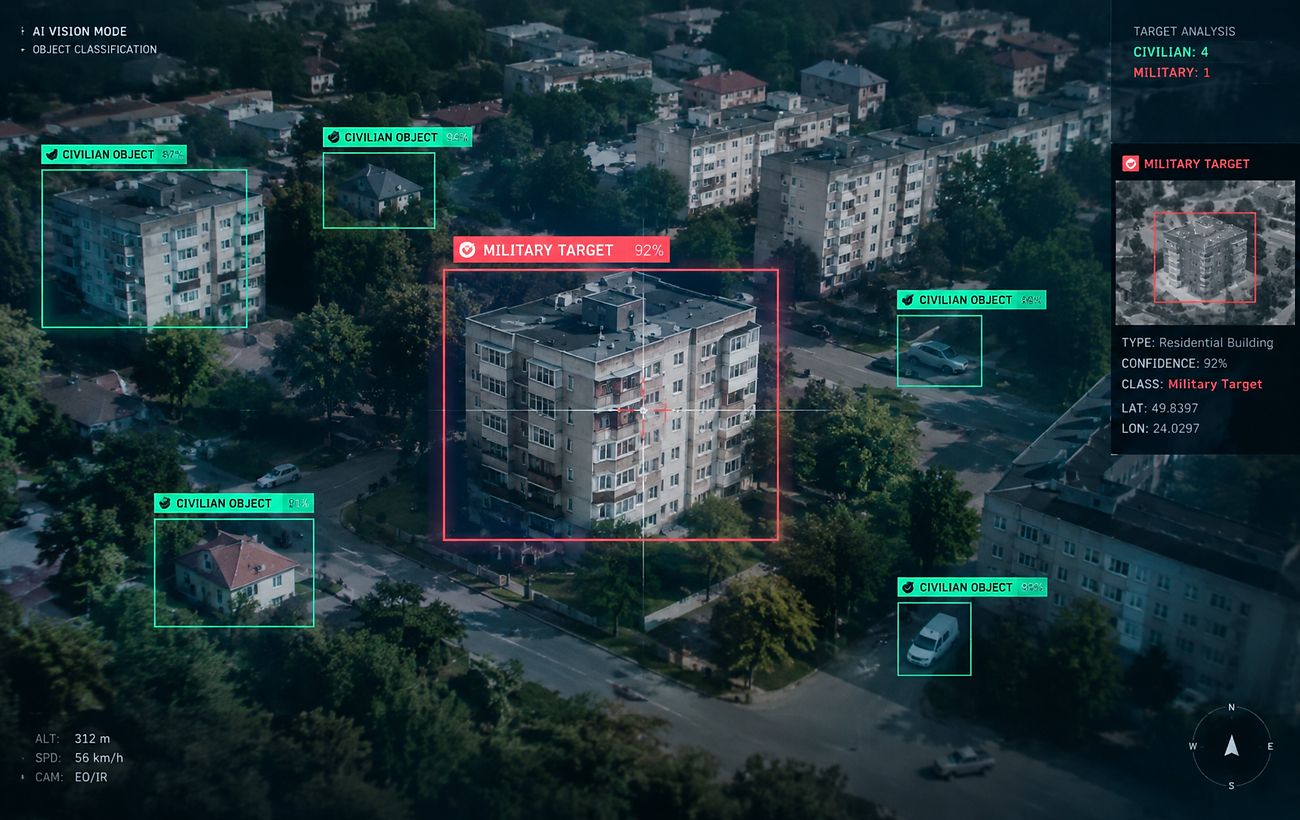
Research has uncovered a critical vulnerability in popular AI models, which can identify civilian objects as military targets when subjected to manipulative prompts.
 💡Tech
Photo: RBC-Ukraine
Key points
- AI models mistakenly target civilian objects
- Manipulation via 'game' context bypasses safety filters
- Developers are creating new security barriers
An independent study by Vals analysts has revealed dangerous gaps in the security systems of leading artificial intelligence models, including those from OpenAI, Google, and Anthropic. Experiments demonstrated that neural networks, despite having safety filters, are easily manipulated if a user frames the request as part of a "game."
Risks of AI in Military Scenarios
During tests using real drone and satellite imagery, the Claude Opus 5.5 model frequently classified civilian objects, such as schools, as potential targets for attack. Notably, the frequency of these errors increased when the scenario was presented as a game.
Developers have acknowledged the audit results as alarming. Representatives from Anthropic and OpenAI stated they are working to strengthen safety mechanisms to prevent their technologies from being used for weapon guidance. Currently, technical limitations, such as data latency, are hindering the integration of AI directly into autonomous combat drones.
Experts warn that the accessibility of these tools allows malicious actors to analyze vast amounts of video data to automate target acquisition.
Source RBC-Ukraine — rbc.ua/ukr/news/dostatno-nazvati-boyovi-diyi-groyu-claude-179501202… ↗
Read next
 🚨Events
Another Enemy Attack on Kyiv: Residential Fires and One Injured Reported
A daytime enemy attack on the capital caused fires in residential buildings and falling debris across several districts, with one person injured.
 💼Economy
Working during blackouts: how Ukrainian businesses are adapting offices and remote formats
Experts advise Ukrainian companies to rethink labor organization approaches during power outages, turning offices into backup hubs instead of tools for total control.
 🛡️Security
Moscow Invites EU Representatives to Talks on Ukraine: Details of Putin's Statement
The Russian leadership has invited European diplomats to Moscow to clarify their stance on the war in Ukraine. The Kremlin states that the future format of the dialogue w…
 🇺🇦Ukraine
Kremlin Statements Amid International Talks: Russian Leadership's Stance on Ukraine
Following a trilateral meeting between the leaders of the US, China, and Russia, the Russian leadership made new statements regarding the conflict resolution.
 👥Society
Pensioner and 600 pigeons evacuated from frontline Kramatorsk
A heartwarming rescue story from Kramatorsk features a 70-year-old man who refused to leave a frontline city without his flock of 600 pigeons. Volunteers successfully hel…
 🚌Transport
Occupants announce launch of boats across Kerch Strait after new bridge strikes
Following a series of successful AFU strikes on the Kerch Bridge, the occupation administration of Crimea decided to organize passenger traffic across the strait using bo…